My Headaches Might Not Be a Headache Problem.
You have tried medication. You have seen your doctor, a neurologist, maybe more. Dr. Allison House checks the jaw and bite connection that most medical workups cannot reach.
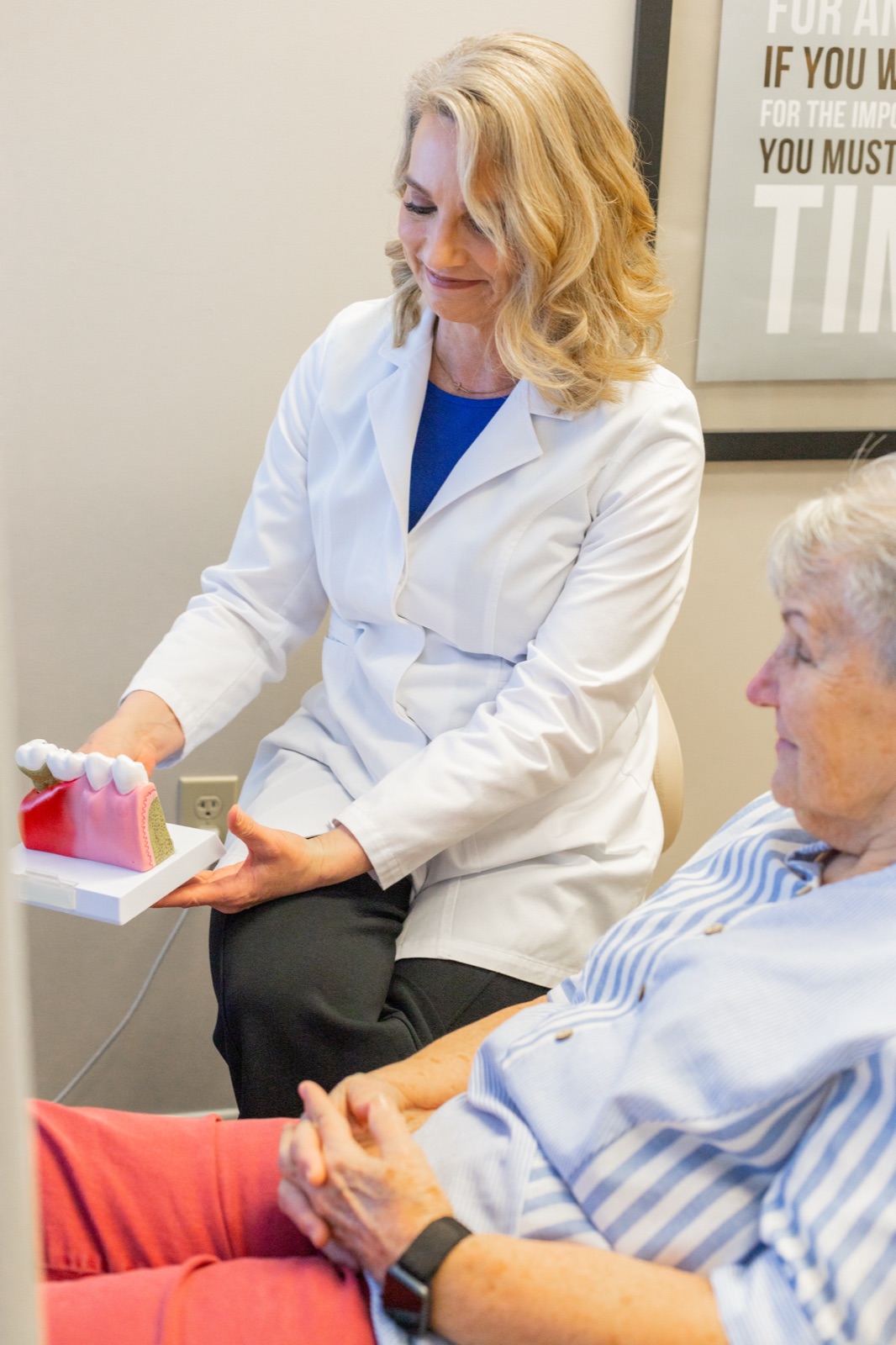
You have tried medication. You have seen your doctor, a neurologist, maybe more. Dr. Allison House checks the jaw and bite connection that most medical workups cannot reach.
The jaw joints sit in front of the ears, and the muscles that control them wrap up into the temples. When those structures are under stress, the pain travels. It can show up in a wide range of ways, including these.
If any of these sound familiar, Dr. House can help you find whether the jaw is where your headaches actually begin.
Headaches with a dental origin are rarely random. They follow specific patterns tied to how the jaw moves, how the teeth come together, and how the airway is working at night. The pain shows up in the head because the structures generating it connect directly to the skull.
At House Dental in Arcadia, Phoenix, Dr. Allison House evaluates the drivers behind chronic headaches that have already been worked up medically without resolution. The goal is to see if a dental diagnosis explains what imaging and bloodwork could not.
Conventional care often focuses on symptom control. Our approach identifies and addresses the underlying biological patterns driving the condition.
Grinding forces can exceed daytime chewing by several multiples. Eight hours of that pressure strains the muscles that travel into the temples and the base of the skull.
Many patients clench during the day without realizing it, especially under stress. Sustained muscle tension around the jaw produces temple pressure, tension headaches, and fatigue.
When the teeth do not meet evenly, the jaw compensates every time you chew, speak, or swallow. The muscles working hardest to make that happen are the ones connected to the head and neck.
Tooth loss, old dental work, or years of grinding can move the jaw into a position where it never fully rests. The muscles stay tight, the joints stay compressed, and the headaches follow.
The temporomandibular joint itself can become irritated, displaced, or degenerative. Joint-origin pain often radiates into the ear, the temple, and the side of the head.
When the airway is partially blocked, the brain signals the jaw to move forward to reopen it. That repeated effort creates the same clenching and grinding pattern that produces morning headaches.
Crowns and fillings that sit too high or too low disrupt the bite. The jaw muscles fire constantly to avoid the interference, and the head pays the price.
Emotional stress amplifies whatever mechanical problem is already present. The jaw is one of the first places the body stores tension, and headaches are often the receipt.
Headaches that cross medical specialties often land in a dental chair because that is where the missing pieces live.
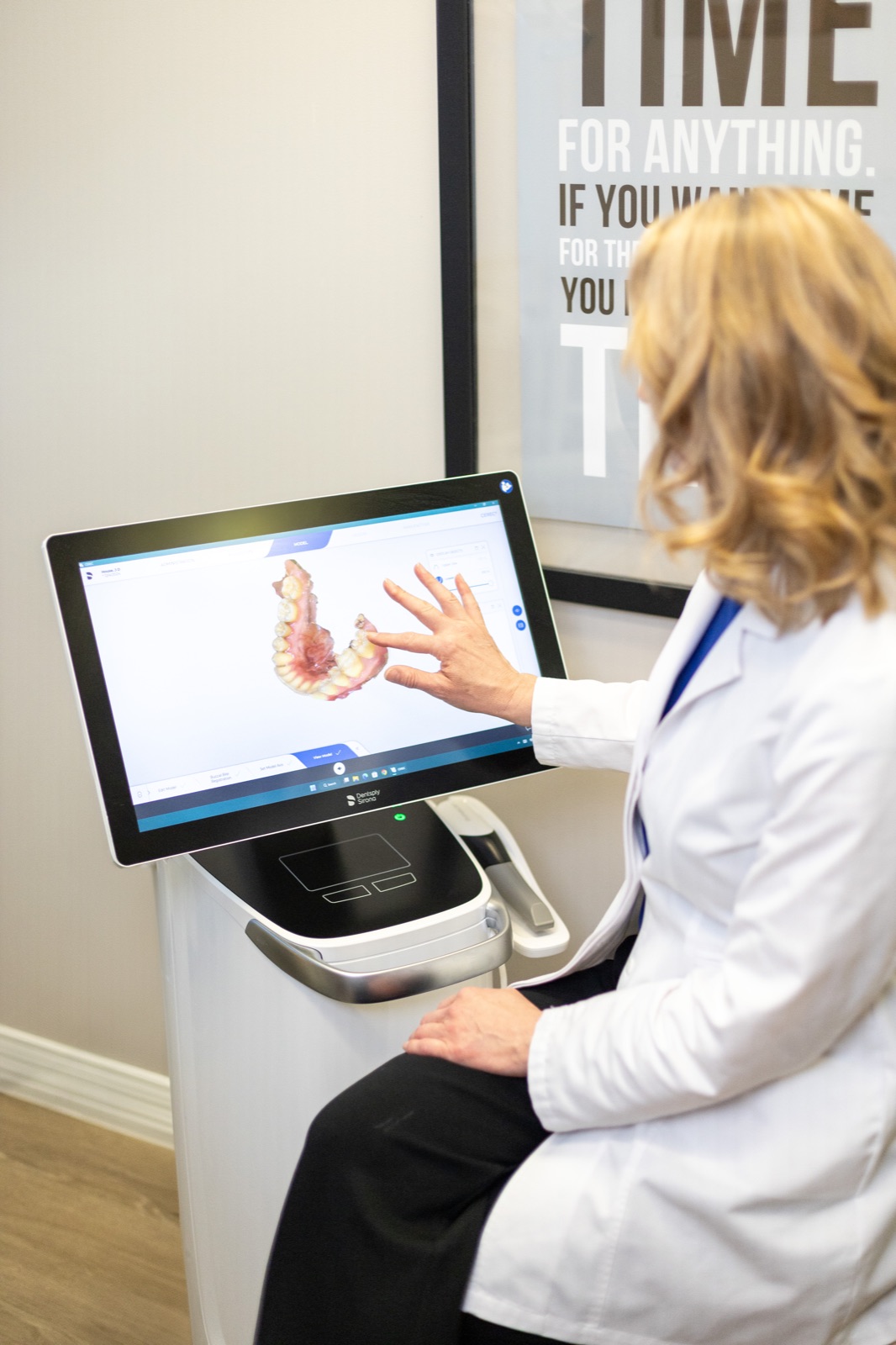
Your first visit begins with a detailed conversation about your headaches, your sleep, your stress, your medications, and your daily symptoms. Dr. House collects cone beam CT imaging, full-series X-rays, digital scans, and photographs. She checks joint motion, muscle tenderness, and bite balance.
She evaluates the relationship between jaw position, bite, and the patterns you are describing. She looks for worn teeth, uneven contacts, joint changes, and signs of nighttime grinding or airway involvement. The goal is an explanation that actually fits your pattern.
Treatment often begins with custom splint therapy to stabilize the jaw and reduce muscle strain. From there, Dr. House may recommend bite correction, restorative work, or a sleep evaluation based on what the data shows. The plan fits your case, not a template.
Every plan is individualized. These are the services most often paired with a diagnostic workup for chronic headaches with a dental origin.
When jaw position and bite alignment are the root cause of chronic headaches, grinding, and facial pain, TMJ treatment is usually the first phase.
When headaches, grinding, and poor sleep cluster together, a compromised airway may be driving the whole pattern and deserves a dedicated evaluation.
If your question is not here, call us. We would rather talk it through than sell you on a visit.
Yes. When the jaw is out of position or the bite is unbalanced, the muscles that run along the temples and sides of the head work harder than they should. That strain produces headaches, especially in the morning after a night of clenching or grinding.
Headaches cross many specialties. Medical providers look in the places they are trained to look, and those are valid. The connection between jaw position and chronic headaches is a dental diagnosis, and it takes a specific kind of exam that most medical appointments are not built for.
You may not know. Many people grind without being aware of it. Morning headaches, sore jaw muscles, worn or flattened teeth, chipped front teeth, and a partner who hears the grinding are all signs. Dr. House checks for every one of these during the diagnostic visit.
Treatment usually begins with custom splint therapy, a therapeutic device designed from your diagnostic data to guide the jaw into a stable, relaxed position. As the jaw settles, headaches often decrease. Further treatment may include bite correction, restorative work, or a sleep evaluation.
Coverage varies by plan. Some dental and medical plans cover portions of TMJ evaluation and treatment, including imaging and splint therapy. House Dental accepts CIGNA and Aetna, and financing is available through CareCredit and Proceed Finance.
A two-hour first visit gives Dr. House the time to find whether your headaches begin in the jaw and build a plan that finally addresses the source.